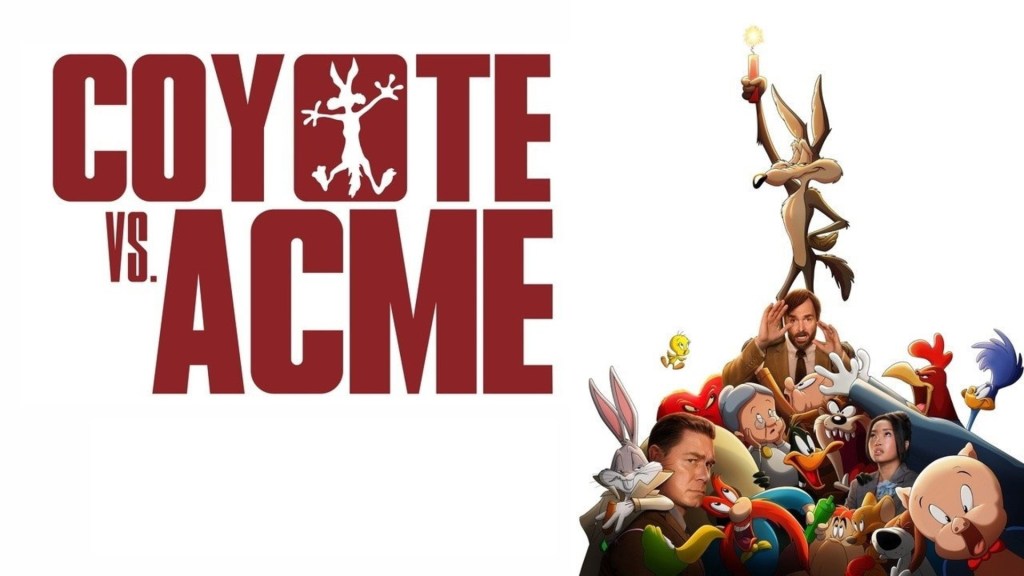
In one of my lower-brow but incredibly joyful cinema excursions, I recently watched the latest Looney Tunes film, Coyote VS ACME. While there’s much that could be said about this movie – from the impressive scenes between live-action humans and non-verbal cartoons to the fact that it was loosely based on a New Yorker article – trouble with the film’s distribution has understandably dominated the discourse. In a great tragedy of capitalism, the feature was almost shelved for a tax write-off. Fortunately, after upset members of the production spoke out and rallied audience support, the company allowed the filmmakers to begin discussions with other distributors. Eventually, Ketchup Entertainment acquired the rights to release the movie.
Whilst the Coyote VS ACME debacle fortunately had a happy ending, many movies and TV shows aren’t so lucky. DC and Warner Bros. filmed an entire Batgirl movie that, beyond a few test screenings, was never shown to the public. For a brief few months, fans of Warwick Davis’s 1988 fantasy film Willow were treated to a high-budget follow-up series on Disney+. Yet despite developing a dedicated fanbase among LGBTQ audiences, the programme was unceremoniously stripped from the streamer and claimed back as a tax write-off. Most recently, I saw news that Andrew Garfield’s new movie Artificial is looking for a new distributor after Amazon canned the project. A biopic following the firing and rehiring cycle of Sam Altman at OpenAI, it appears as though Amazon may have decided to shelve the movie after making an investment deal in the featured corporation.
All this begs the question: should corporations really have the power to deny audiences seeing the art they funded? On the one hand, if they staked the money for a production, it seems logical they should be able to do what they want with it. It’s understandable why a business may wish to cut their losses rather than spend good money after bad trying to promote a movie they conclude won’t be commercially viable. On the other hand, nobody creates a movie only for it to live in a drawer. Art is designed to be experienced, and denying creatives the right to share the projects they worked so hard on feels instinctively cruel.
Is there any easy solution to this? Probably not. I just hope industry executives find it within themselves to have as much reverence for artists as they do for their bottom line. Ultimately, Coyote VS ACME was a lot of fun, and I’m glad I got to watch it.
 Josh Wright
Leave a comment