Late last year, Steven Bartlett’s Diary of a CEO (DOAC) podcast issued a press release blog post claiming to be the ‘First Major Podcast to Implement Consistent On-Screen Fact-Checking’. Accuracy in free-form conversational podcasts has long been a problem for the industry and so any attempt to improve the state of play in that regard marks a commendable step in the right direction. That said, before jumping to praise Bartlett as the innovative standard-bearer he wishes to be seen as, it’s worth scrutinising the efficacy of the implemented fact-checking measures and placing the scheme in a wider context.
According to the post, Diary of a CEO has hired a medical PhD graduate to review their health-related episodes and produce a set of written annotations for the video transcript. Rather than intervening in real time or editing out misleading claims in post, annotations will appear on screen for the viewing audience. In practice, that means that on the YouTube version viewers will sometimes see what are described as “DOAC Community Notes” — text clarifications or expansions that pop up alongside specific statements as they happen, intended to provide additional context and evidence where needed. Furthermore, for listeners keen to learn more about the subjects discussed, each episode is accompanied by an “Independent Research and Further Reading” document, collating peer-reviewed sources and supplementary material linked to claims raised during the conversation.
Whilst the scheme merits its own scrutiny, it is first of all worth highlighting the way in which it is presented by Bartlett’s company. In recent years, both Bartlett’s businesses and the Diary of a CEO podcast more specifically been criticised for misleading claims and scientific misinformation. It consequently doesn’t take Sherlock Holmes to deduce the proposed fact checking scheme is an attempt to salvage an already tarnished reputation. Yet, were one to rely solely on Bartlett’s press release, one would be left with a markedly different impression. The announcement frames the initiative not as a response to external criticism or editorial failure, but as a pioneering act of responsibility, described as a “significant investment in editorial rigour” and positioned as a model that could “reshape how podcasts handle scientific and medical content.” The piece portrays Diary of a CEO as an industry leader raising standards for others to follow and portraying the introduction of on-screen annotations as evidence of a deeper moral commitment to transparency and accountability.
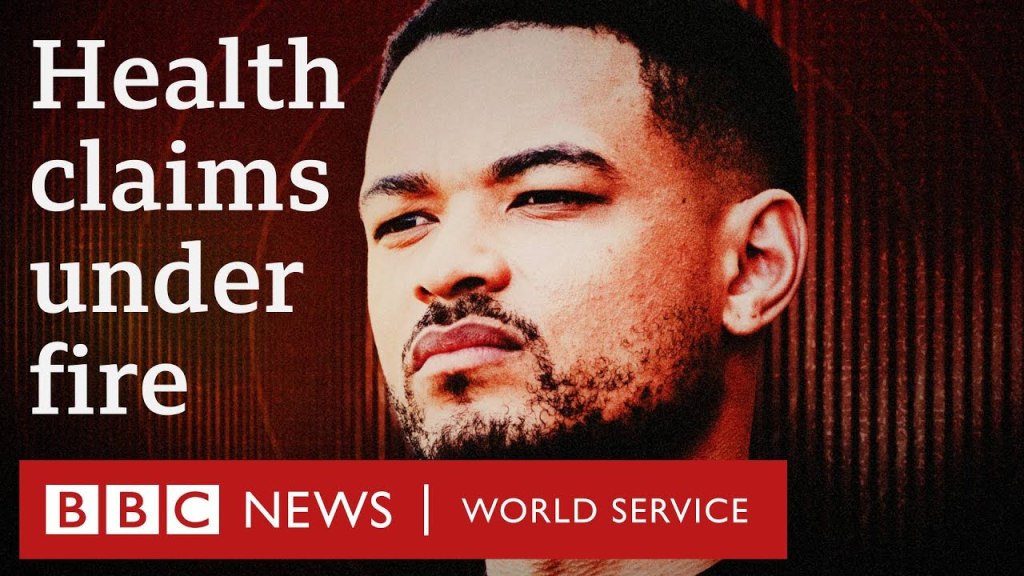
The gall to portray a necessary damage-limitation exercise in the language of trailblazing editorial responsibility demonstrates a striking arrogance. The Diary of a CEO was not merely prone to the occasional lapse in editorial judgement that will, from time to time, befall even the most respected journalistic institutions. Of the twenty-three health-related episodes released between April and November 2024, fifteen were found to contain potentially harmful claims. That is over 65 per cent of the output reviewed by the BBC’s investigative medical panel.
More troubling still, several of the claims aired on the programme crossed the line from legitimately contested interpretation into clear-cut misinformation — the sort that ought to have triggered immediate alarm for anyone possessing even a rudimentary degree of scientific literacy. In its press release, The Diary of a CEO insists that podcast “hosts cannot reasonably be expected to possess expert knowledge across every topic discussed.” However, that defence collapses when confronted with assertions such as the claim that the COVID-19 vaccine was a “net negative for society” — a statement so starkly at odds with the scientific consensus as to require no specialist expertise to recognise its danger. It’s the kind of claim a responsible podcast ought not to have put out, but which, at the very least, should have been robustly challenged by the host with demonstrable facts.
Diary of a CEO is by no means the worst offending podcast when it comes to promoting scientific inaccuracy. That said, misinformation shouldn’t be graded on a curve. The show misled the public. Much as hiring a medical PhD graduate to fact check content is undeniably a positive step, the lack of contrition demonstrated in the show’s press release is deafening given the moral imperative for humility.
It’s also worth calling into question the effectiveness of the Diary of a CEO‘s proposed fact checking scheme. Though podcasts are fast becoming an increasingly video-oriented medium, there are still plenty of users who prefer the more traditional audio only listening experience. Bringing up text in an on-screen fact check simply isn’t a viable solution for the listening only audience. Even people who watch the podcast on YouTube presumably don’t have their eyes glued to the screen the entire time. A popup fact check box could easily be missed by a viewer with only half an eye on the show.
In fairness, there is neither a cheap nor easy solution to the fact-checking conundrum. Editing out errors in a free-flowing conversation can be difficult, while interrupting discussion with audible corrections in post-production would almost certainly disrupt the listener experience. The best solution, then, is to reduce the likelihood of misinformation arising in the first place. That requires hosts to have enough background knowledge to recognise when a claim needs to be challenged. Contrary to Bartlett’s assertion that “hosts cannot reasonably be expected to possess expert knowledge across every topic discussed,” this is precisely the standard that should determine who is fit to host such conversations. Where a host lacks the ability to evaluate claims as they are made, the result is not open-minded discussion but the uncritical relay of whatever a guest happens to assert. The expectation that a single, familiar host can competently facilitate discussions across an ever-expanding range of subjects is not just unrealistic, but deeply problematic.
Unfortunately, the general public like it when just a few familiar hosts help them navigate a wide variety of topics and subject areas — and I include myself in that group. When I first started listening to podcasts, I loved the BBC’s Brexitcast, fronted by Laura Kuenssberg, Katya Adler, Adam Fleming and Chris Mason. As the show gradually broadened its scope and rebranded as Newscast, it also expanded its roster of contributors. The result was undoubtedly more comprehensive, but it came at a cost: with so many different voices cycling through the feed, I found myself feeling less connected to the programme.
I much prefer the format of a podcast like The News Agents, in which a small, consistent group of hosts — Emily Maitlis, Jon Sopel and Lewis Goodall — present the news every episode. I’ve come to trust their voices and enjoy the rapport between them. Though highly knowledgable, Maitlis, Sopel and Goodall cannot possibly be experts in every subject they cover, yet I would still rather listen to them navigate a wide range of issues than dip in and out of specialist-led discussions fronted by unfamiliar voices. Put simply, turning to subject-qualified, expert-facilitated discussions can require a deliberate act of effort: choosing to press play knowing that, without a personal connection to the host, the experience will demand more attention and emotional energy from the outset. In contrast, listening to the familiar voice of a parasocial friend lowers that activation cost, making it easier to engage and allowing learning to feel effortless, even entertaining. Hence, I wholeheartedly understand why podcasts like The Diary of a CEO have found such enormous success in an attention economy that rewards familiarity, consistency, and emotional connection over subject-matter authority.
So what is the solution? There’s no easy fix because the problem is cultural as well as editorial. Audiences like familiarity. They like hearing the same trusted voice navigate them through complex subjects, even when that voice lacks the expertise to properly interrogate what is being said. Fact-checking overlays and post-hoc corrections may offer a partial remedy, but they are by no means a panacea given the fundamentally audio-first nature of podcast consumption, where visual caveats are easily missed. What follows, then, is not a definitive solution but a sketch of several changes that could begin to address the problem at its source.
First, if audiences are less keen to engage with subject-expert hosts, the least production companies can do is ensure that non-expert hosts are adequately prepared. If you’re going to the trouble of hiring a medical PhD to review episodes post-recording, why not have them compile a pre-interview briefing document that outlines the scientific consensus, flags commonly debunked claims, and identifies points where robust challenge may be required? Formats like The News Agents work not because the hosts are experts in everything, but because they are supported by production teams whose job it is to research claims in advance, anticipate lines of questioning, and equip presenters to challenge what they hear in real time. Though Bartlett is also almost certainly provided some form of pre-production notes, the repeated appearance of scientific misinformation suggests that past preparation documents were either insufficient or the host was failing to seriously review the material prior to interview.
Second, mitigation has to begin at the point of guest selection. If a podcast is going to platform claims about health, medicine, or science, it is not enough that a guest is confident, charismatic, or commercially successful — they must be demonstrably qualified in the subject under discussion. Even then, expertise should not be treated as a licence to speculate freely. This is especially important when guests have direct commercial interests in the ideas, products, or interventions they are promoting, where the incentive to overstate benefits or downplay uncertainty is obvious. Guests should be constrained to the limits of their established knowledge, with hosts prepared to intervene when claims drift into conjecture, exaggeration, or even outside the guest’s area of expertise. Without these guardrails, fact-checking becomes an exercise in damage control rather than a meaningful safeguard against misinformation.
A third strategy would be to employ qualified co-hosts on episodes dealing with specialist subject matter. Rather than expecting a single, non-expert host to competently oversee discussions on everything from mental health to immunology, production teams could pair a familiar presenter with a subject-matter specialist able to intervene in real time. This would preserve the accessibility and continuity audiences value while ensuring that misleading claims are challenged as they arise. While such an approach may be prohibitively expensive for many podcast productions, shows with the scale and revenue of Diary of a CEO or The Joe Rogan Experience could reasonably absorb the cost in the name of editorial responsibility.
Employing the above strategies would help ensure accuracy while having minimal impact on the listener experience. However, where these measures fail to prevent misinformation from being recorded, the final recourse should be to act decisively in post-production. Misleading claims should be cut even at the cost of conversational flow, or corrected audibly in post where removal is impractical. Neither option is ideal, but both are preferable to allowing false or harmful claims to stand unchallenged.
It is also important to be clear about the scope of this criticism. I am not arguing that every podcast, regardless of scale, resources, or reach, should be held to identical editorial standards. A small, independently produced show with a limited audience does not wield the same cultural power, nor does it possess the same capacity for research, legal review, or post-production intervention, as a media operation with millions of listeners and substantial commercial backing. Standards should rise in proportion to influence. Inevitably, conversational formats will contain imprecision, minor errors, and debatable interpretations, many of which can reasonably be let pass. What is harder to excuse are claims that are plainly misleading or demonstrably harmful. When a podcast like The Diary of a CEO reaches an audience comparable to mainstream broadcasters, monetises trust at scale, and shapes public understanding of health and science, allowing assertions such as the claim that COVID-19 vaccination was a “net negative for society” to go unchallenged represents a serious editorial failure. It is precisely because of this scale and influence that such programmes assume responsibilities that more marginal or hobbyist productions reasonably do not.
Ultimately, on-screen annotations and after-the-fact clarifications cannot substitute for editorial judgement exercised at the point of production. If The Diary of a CEO is serious about raising standards, it must accept that conversational freedom is not a higher good than accuracy, and that platforming misinformation carries responsibilities that cannot be discharged through footnotes alone. Fact-checking is not a branding exercise, nor a reputational repair strategy, but a discipline that must shape who is invited on, how interviews are conducted, and what is ultimately broadcast. None of these reforms would be easy, but implementing them alongside the changes already made would amount to a real industry leading improvement to the standards of free-flowing podcast discussions. I hope this is a challenge more podcasts take on board.
As a final side note, it has long surprised me how Diary of a CEO has retained cultural respectability in light of its scientific inaccuracy scandal. In recent weeks, however, mainstream opinion seems to be catching up with me following further fresh controversies which, while not primarily about fact-checking or scientific accuracy, appear to have acted as the final catalyst in a longer-running reputational unravelling. These controversies were sparked by a widely shared episode in which Bartlett and guest Chris Williamson discussed declining birth rates in a way that many listeners felt trivialised women’s reproductive choices and went largely unchallenged by the host, prompting widespread online backlash accusing the show of amplifying regressive, manosphere-aligned talking points. On the one hand, I regret not having published this piece sooner as a few months ago my thoughts on the podcast were far less mainstream (I had an early draft written back in November). That said, it’s been reassuring to see I’m not a lone voice in feeling this way, and I’m pleased the podcast has received increased press attention in recent weeks. I thoroughly recommend Bansinath’s recent article in The Cut as well as Reid’s Instagram breakdown for the I Paper.
 Josh Wright
Leave a comment