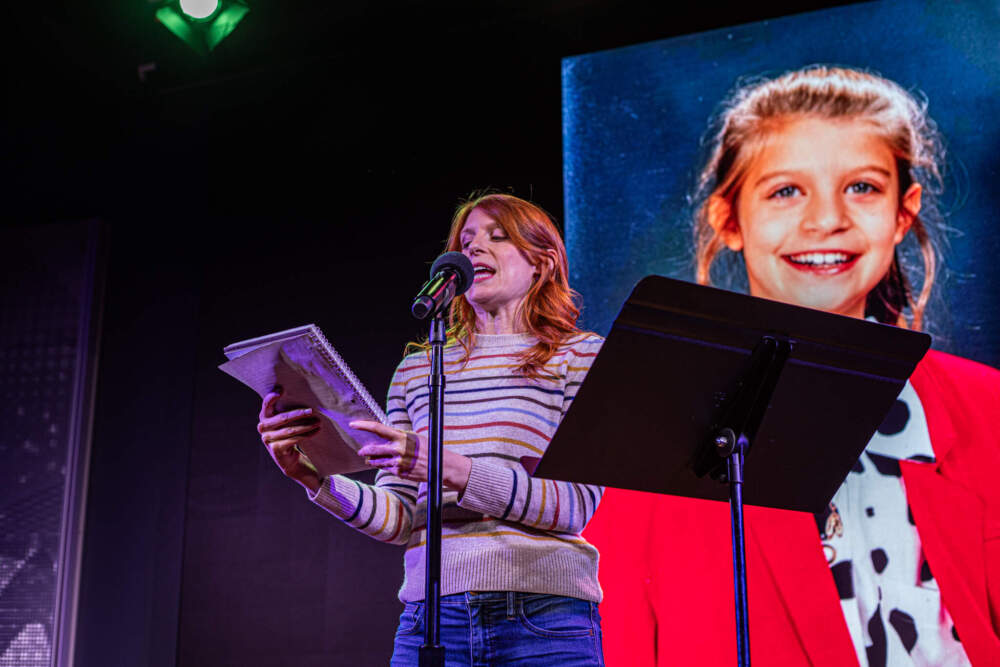
Mortified is a podcast where adults share the most embarrassing artefacts from their teenage years—diary entries, love letters, song lyrics, poems—onstage in front of a live audience. It’s a part confessional, part comedy that gives an unfiltered look into the experience of adolescence.
For a long time this simple premise had little appeal to me. When I first began listening to podcasts towards the end of 2016, I was only 15 years old. I didn’t need to experience teenage angst vicariously through audio—I was already living it. Sure, the clips of the show I’d heard were funny, but would the podcast offer me any educational value? At the time I was learning about history from Malcolm Gladwell (Revisionist History), politics from Laura Kuenssberg (Brexitcast), science from Alan Alda (Clear and Vivid). What could I possibly have to learn from some 14-year-old’s diary?
Despite adverts for the show being tagged onto the end of my favourite Radiotopia programs, it wasn’t until early 2024 that I finally decided to give Mortified a listen.
I’m delighted to say I was profoundly moved by it.
There’s a lot I could praise about the podcast; from the unique insight it offers into the thought patterns of teenagers to the clever thematic editing decisions made when producing the show. Yet for me, the most impactful aspect of the program was the audience laughter. Most people dread being laughed at, fearing their areas of vulnerability becoming the butt of a joke. To many folks, the idea of reading their diary for public entertainment may seem a cruel and unusual punishment. The laughter a form of torture. Why would anyone subject their most secret thoughts to ridicule? Everyone remembers the scathing cackle of the school bully. Who would want to relive that?

Fortunately, no one at Mortified events has the mean-spirited chortle of Nelson Muntz. To the contrary, the laughter at Mortified overflows with a life-affirming kindness. Audience chuckles spring from a place of sympathy. Each and every laugh laced with a deep-rooted recognition that they’ve been there too. Everyone goes through adolescence. Audience members know what it’s like to be humiliated in front of friends, to pour their souls into cringeworthy poetry about a crush, and to ride the emotional rollercoaster of first love. The laughter’s beautiful because it’s an audible expression of connection. A clear-as-crystal sign they’ve seen the humanity in a stranger and have been moved by it on an emotional level.
That laughter’s a tonic. A tonic so strong you could bottle up and sell it as medicine. Not only is the noise the epitome of empathy, it’s the antidote to social fear. Once you realise everyone has embarrassing moments laughter loses its sting. Suddenly, exposing your insecurities to the world doesn’t feel so threatening. The risk now seems hollow. You begin to recognise that vulnerability can be powerful rather than perilous. If being laughed at is the worst that can happen, then there’s really nothing to fear. In some ways I wish I had listened to Mortified as a teen. At an age when the brain is incredibly attuned to the thoughts of peers, I think I would have found the laughter liberating. It could have given me a licence to be more fully myself and helped me to be less judgemental of others.
Mortified ends each of their episodes with the sagacious tagline “We are freaks, we are fragile, and we all survived.” Whilst the truth of this closing phrase may be self-evident to adults who can reflect back on their adolescence with the safety of distance, it’s quite hard to appreciate as a teen/young-adult. When you’re young every embarrassment feels world-ending. You simply don’t have the life experience to know you’ll get through it. Now in my early twenties, I still find invaluable comfort and reassurance in listening to Mortified. It’s heartening to be reminded that others have had the same confusing, cringeworthy thoughts and feelings I’ve experienced, and though at the time these struggles may have felt impossible to get over, most people manage to make it through.
In the end, Mortified didn’t offer the academic lessons I craved as a teen, but the insights it gave me as a young adult—about empathy and our shared humanity—proved far more valuable than anything I could’ve learned from the serious podcasts I lauded.
Images from: Radiotopia, WBUR and The Simpsons Wiki
 Josh Wright
Leave a comment